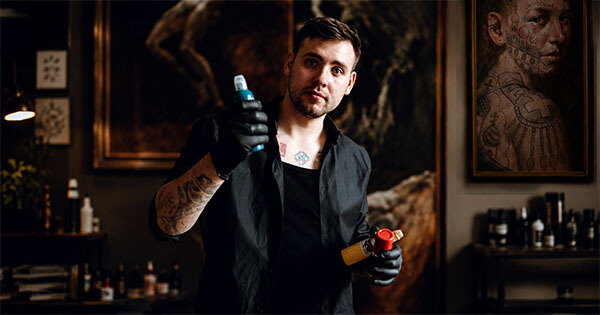
A full back tattoo is one of the most ambitious projects I can take on as a tattoo artist. The back offers enough space for a detailed composition, but working on that scale also means thinking carefully about anatomy, visual balance, and the entire tattooing process.
I'm Andrey Kolbasin, a realism tattoo artist based in Los Angeles. I specialize in large-scale custom work, including full back pieces, portraits, and complex compositions in both color and black and grey.
When I plan a back piece, I don't simply enlarge an image until it fills the available space. I consider how the main subjects connect, how the composition follows the body, and how the work will develop across multiple sessions.
In this article, I'll explain how I approach full back tattoo design, what affects the number of sessions, and why certain projects demand solutions that can't be planned entirely in advance.
Start With a Complete Design Concept
The first step is deciding what the tattoo should communicate. Some clients come to me with a clearly defined subject. Others have several references, a particular atmosphere, or a story they want to express.
Both approaches can work. What matters is finding a direction that can support a composition across the entire back.
A portrait might be the central subject, with landscape, architecture, or atmospheric details supporting it. Another project might involve several figures arranged into one larger narrative.
I prefer to establish that overall direction before concentrating on individual details. Otherwise, it's easy to create several strong images that don't work together as a complete piece.
My approach: Start with the main idea, decide where the visual focus should be, and then build supporting elements around it. The back gives us room for complexity, but the composition still needs a clear structure.
Designing for the Shape of the Back
A back tattoo isn't a flat picture. The shoulders, shoulder blades, spine, waist, and lower back all influence how the design will look on the body.
A composition can appear perfectly balanced on a screen and feel very different once it follows those natural curves.
This is why I pay attention to the placement of important subjects. Large portraits, figures, and architectural elements need to sit in areas where their proportions remain convincing.
I also consider how the tattoo changes when the client moves. The design should feel intentional from different viewpoints, not only in one photograph.
The Importance of Visual Flow
The upper back provides space for wider subjects, while the lower back often benefits from a different rhythm. I use supporting elements, background transitions, and changes in contrast to connect those areas.
The goal is a composition that feels natural on the body, even when the subject matter is highly detailed.
Building Depth Across a Large Composition
With a full back tattoo, it's tempting to fill every available area with detail. But more detail doesn't automatically create a stronger design.
I need to establish which parts of the image should attract attention first. The main subject may have stronger contrast and more carefully developed textures, while surrounding elements can be simpler.
That difference creates a visual hierarchy. It helps the viewer understand the composition from a distance and then discover smaller details up close.
When Portraits Become Part of a Larger Scene
Portraits are particularly interesting in large-scale work. They can carry strong emotion, but their proportions and lighting need to connect with the surrounding imagery.
A portrait shouldn't look like a separate photograph placed on top of a background. I want the figure, surrounding environment, and lighting to feel like parts of the same artwork.
Turning a Personal Idea Into a Full Back Tattoo
Some back pieces begin with a personal story rather than a particular artistic style.
A client might want to commemorate an important moment, represent a passion, or bring several meaningful images into one composition.
My challenge is to give those elements a visual structure without losing the meaning behind them.
I look for connections between the references. Those might come from perspective, lighting, movement, or the way individual subjects are arranged across the back.
The finished result needs to work as a tattoo first. The story gives the project meaning, while the composition gives it a visual identity.
Black and Grey Back Tattoo Design
Black and grey realism is particularly effective when a composition depends on atmosphere, depth, and dramatic lighting.
I can use dark values to establish strong focal points, while softer transitions help connect supporting imagery.
On a large back piece, those decisions become especially important. If everything is equally dark or equally detailed, the composition may lose its hierarchy.
I also think about which areas can benefit from negative space. Not every part of the back needs the same visual density.
In my black and grey tattoo portfolio , you can see more examples of how contrast and realistic shading influence my work.
From a Full Back Tattoo to a Larger Bodysuit
Sometimes a full back tattoo is only one part of a much larger project.
The composition can continue toward the shoulders, arms, chest, or sides of the torso. When this is the goal, planning those connections early makes a real difference.
I don't want to complete a back piece and discover later that its borders make the next section difficult to integrate.
For larger projects, I consider the possible extensions while developing the main composition. This helps keep the overall direction consistent, even when the tattoo is completed in stages.
You can see more of my extended compositions on the Large-Scale Tattoos page.
When Color Becomes Part of the Story
Color changes the way I approach a large tattoo composition.
It can create atmosphere, separate visual layers, emphasize a focal point, and give the entire piece a particular emotional direction.
But I don't believe that every area needs to be equally colorful. I prefer to use contrast and saturation intentionally, so the composition remains balanced.
A full back tattoo offers enough space for ambitious color transitions, but those transitions still need to make sense across the anatomy.
My Color Tattoo portfolio includes more examples of this approach.
When the Back Becomes Part of the Design
Not every large tattoo follows a predictable design process. Sometimes the anatomy creates a challenge that requires a completely custom solution.
One project involved visually balancing the natural curvature of a client's back. The composition needed to work with the body's asymmetry rather than simply ignore it.
I developed an original decorative frame around the central image, adjusting the composition as the project evolved. The center features a reproduction of a painting by Leonardo da Vinci.
“The challenge was to visually balance the curvature of the client's back, with all the little complications that came with it. I had to come up with the frame from scratch and improvise as the work progressed. At the center is a reproduction of a Leonardo da Vinci painting.”
This is a good example of why I don't see custom tattooing as simply transferring a finished picture onto the skin.
A large project requires decisions about placement, proportion, perspective, and visual balance. Sometimes those decisions can only be fully resolved while working with the actual anatomy.
The ability to adjust a composition without losing its original idea is an important part of my approach to large-scale tattooing.
How I Plan a Full Back Tattoo
Every large project starts with understanding the idea, the available space, and the client's expectations.
I prefer to establish the overall direction before beginning the actual tattooing process. This helps me make better decisions about composition and scheduling.
Initial Consultation
We discuss the concept, references, preferred style, and the area you want to cover. Existing tattoos should also be considered at this stage.
Design Direction
I establish the main visual subjects, overall atmosphere, and how the composition should work with the anatomy.
Session Planning
We discuss the estimated amount of work, the sequence of appointments, and the healing time needed between sessions.
Developing the Tattoo
The full composition takes shape over multiple sessions. Each stage contributes to the larger design.
Completing the Project
As the work progresses, I evaluate the balance, transitions, and remaining details needed to bring the composition together.
How Many Sessions Does a Full Back Tattoo Take?
A full back tattoo is a multi-session commitment. The exact amount of time depends on coverage, complexity, detail, and the techniques involved.
I work in full-day tattoo sessions, with a standard appointment lasting six hours.
Some designs involve several detailed portraits, extensive backgrounds, or complicated transitions. Others use larger shapes and a simpler overall structure.
Those differences have a direct effect on the amount of tattooing required.
As a rough planning reference, a complex full back piece may require approximately five to ten full-day sessions, and some projects can take longer. This is not a fixed quote or guaranteed schedule.
I prefer to estimate the project after reviewing the concept, the client's anatomy, and the amount of detail required.
Why Healing Time Matters
A project involving large areas of skin needs to be planned around healing, not only the time spent tattooing.
The interval between appointments depends on the areas being worked, how the skin responds, and the progress of the project.
I don't recommend planning the entire back piece as though every session can happen immediately after the previous one.
Preparing for a Full-Day Back Tattoo Session
A long tattoo appointment is easier to manage when you arrive prepared.
I recommend getting enough sleep, eating before your session, and staying hydrated. Wear comfortable clothing that gives me access to the area we're working on.
It's also important to think about recovery after the appointment. The back is involved in many everyday movements, and freshly tattooed skin needs proper care.
I'll provide aftercare instructions appropriate to the work completed. Following them is part of taking care of the finished tattoo.
If you have questions about appointments, booking, or preparation, you can also visit my Tattoo FAQ.
Full Back Tattoo Questions
Do I need a complete design before the consultation?
No. A general idea, references, or a preferred theme is enough to start. We can discuss how to turn those elements into a complete composition for the back.
Can a full back tattoo combine several subjects?
Yes. The important part is giving those subjects a unified visual structure through placement, lighting, contrast, and transitions.
Should I choose color or black and grey?
Both can work. The decision depends on the subjects, atmosphere, and composition you're trying to achieve. I work in both approaches.
How long does a full back tattoo take?
It's a multi-session project. The exact number of appointments depends on size, complexity, and detail. I can provide a more useful estimate after reviewing your idea.
Can a back piece become part of a bodysuit?
Yes. A full back composition can be developed with future extensions in mind. Planning those connections early can make the larger project more coherent.
Can you adapt a design to an asymmetrical back?
The composition can be adjusted to work with an individual's anatomy. Each situation is different, so I need to evaluate the placement and concept before discussing possible design solutions.
The Best Back Pieces Are Planned as a Whole
For me, a successful full back tattoo isn't simply a large image with a lot of detail.
It's a composition designed for the individual body, with a clear visual direction and strong connections between its elements.
That requires thoughtful planning, time, and sometimes the ability to solve unexpected challenges during the process.
If you're considering a full back piece, start by collecting the references and subjects that matter to you.
You don't need to arrive with a finished design. My job is to help turn your idea into a custom tattoo that works with your anatomy and feels complete.
You can explore more finished work on my Full Back Tattoos in Los Angeles page.
Let's Discuss Your Full Back Tattoo
I'm based in Los Angeles and work on custom realism and large-scale tattoo projects.
If you're planning a full back piece, send me your idea, the subjects you're interested in, and any reference images you'd like me to see.
The initial consultation is free. We can discuss the composition, placement, and possible next steps for your project.
REQUEST A CONSULTATION